
COMPANY NEWS | OCTOBER 28-29, 2025
Creating Harmonized Standards
for Blockchain Intelligence
CHAINARGOS WORKS TOWARDS CREATING HARMONIZED STANDARDS FOR BLOCKCHAIN INTELLIGENCE
9TH GLOBAL CONFERENCE ON CRIMINAL FINANCES AND CRYPTOASSETS ORGANIZED BY
THE BASEL INSTITUTE ON GOVERNANCE, EUROPOL, AND THE UNITED NATIONS OFFICE ON DRUGS AND CRIME (UNODC)
Introduction
Vienna, AUSTRIA – ChainArgos was honored to participate in a groundbreaking panel discussion on blockchain intelligence standardization at the 9th Global Conference on Criminal Finances and Cryptoassets, held at the iconic United Nations Office in Vienna, Austria.
Our General Counsel Patrick Tan joined distinguished experts including Oleksiy Feshchenko (Adjunct Professor, Case Western Reserve University), Christian Rückert (Professor, University of Bayreuth), Diana Pătruț (Project Manager, Blockchain Intelligence Professionals Association), and Basile Verhulst (CEO, Chainlabs) for a 90-minute workshop expertly moderated by Bernhard Haslhofer from the Complexity Science Hub.
The session brought together key stakeholders from across the blockchain intelligence ecosystem, including representatives from major analytics firms such as Crystal Intelligence, Global Ledger, TRM Labs, Elliptic, Allium, and Ivix, to address one of the industry’s most pressing challenges – the lack of interoperability between blockchain intelligence tools.
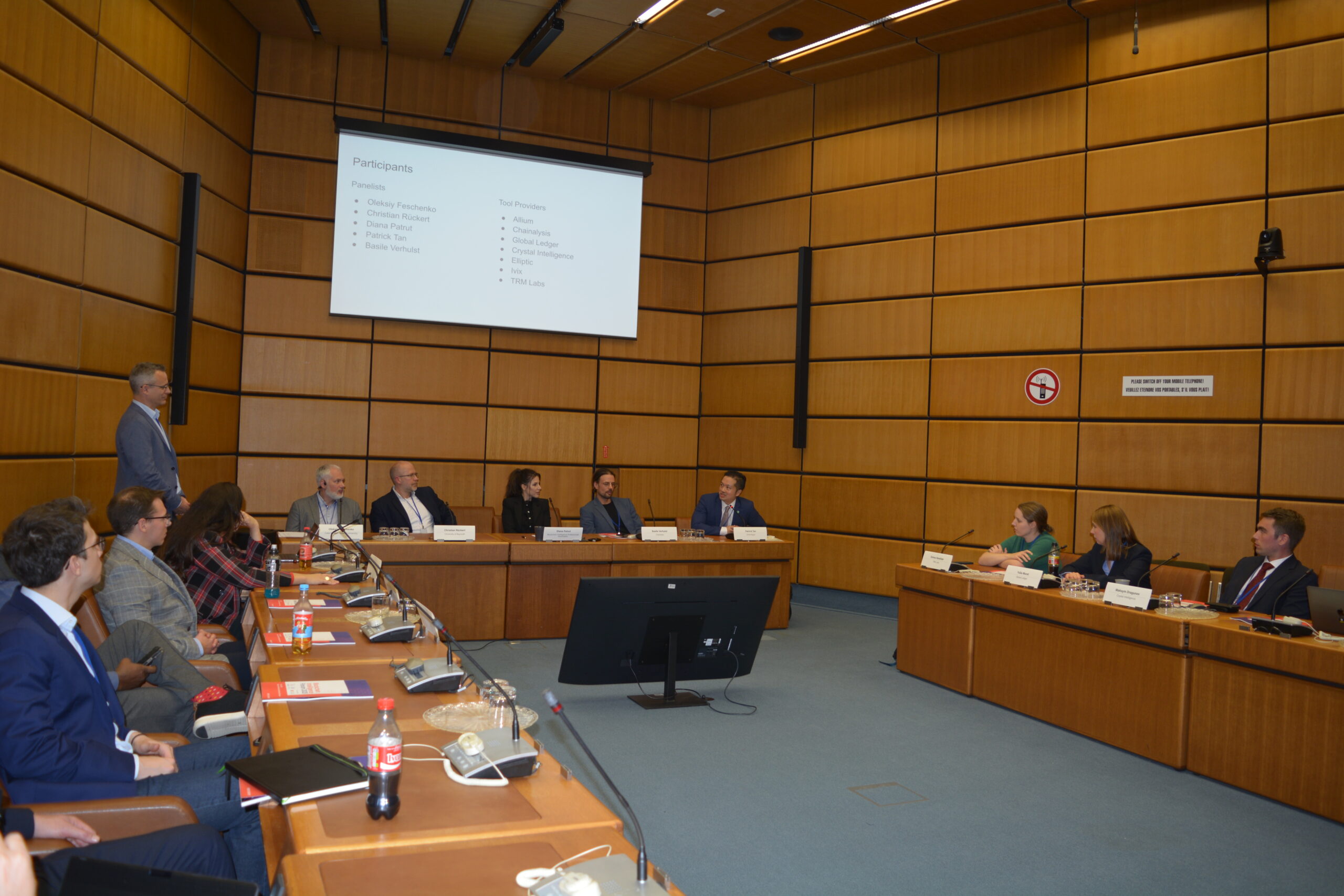
ChainArgos General Counsel Patrick Tan (seated at main bench, extreme right in a blue suit) spoke about the need to pursue low-hanging fruit first, to get the standardization initiative for blockchain intelligence started.
Why Standards Matter
While investigators collaborate across borders to combat cryptocurrency crimes, their blockchain intelligence tools remain frustratingly isolated. Current platforms don’t allow investigators to export an investigation from one tool and import it into another due to incompatible data formats, non-reproducible computational methods, and lack of standardized interfaces.
This fragmentation isn’t just an inconvenience—it represents a fundamental barrier to effective investigation and prosecution of cryptocurrency-related crimes.
The panel explored why harmonized standards are essential for professionalizing blockchain intelligence, improving evidentiary practices, and ensuring that digital forensics meet the rigorous requirements of courts across different jurisdictions.
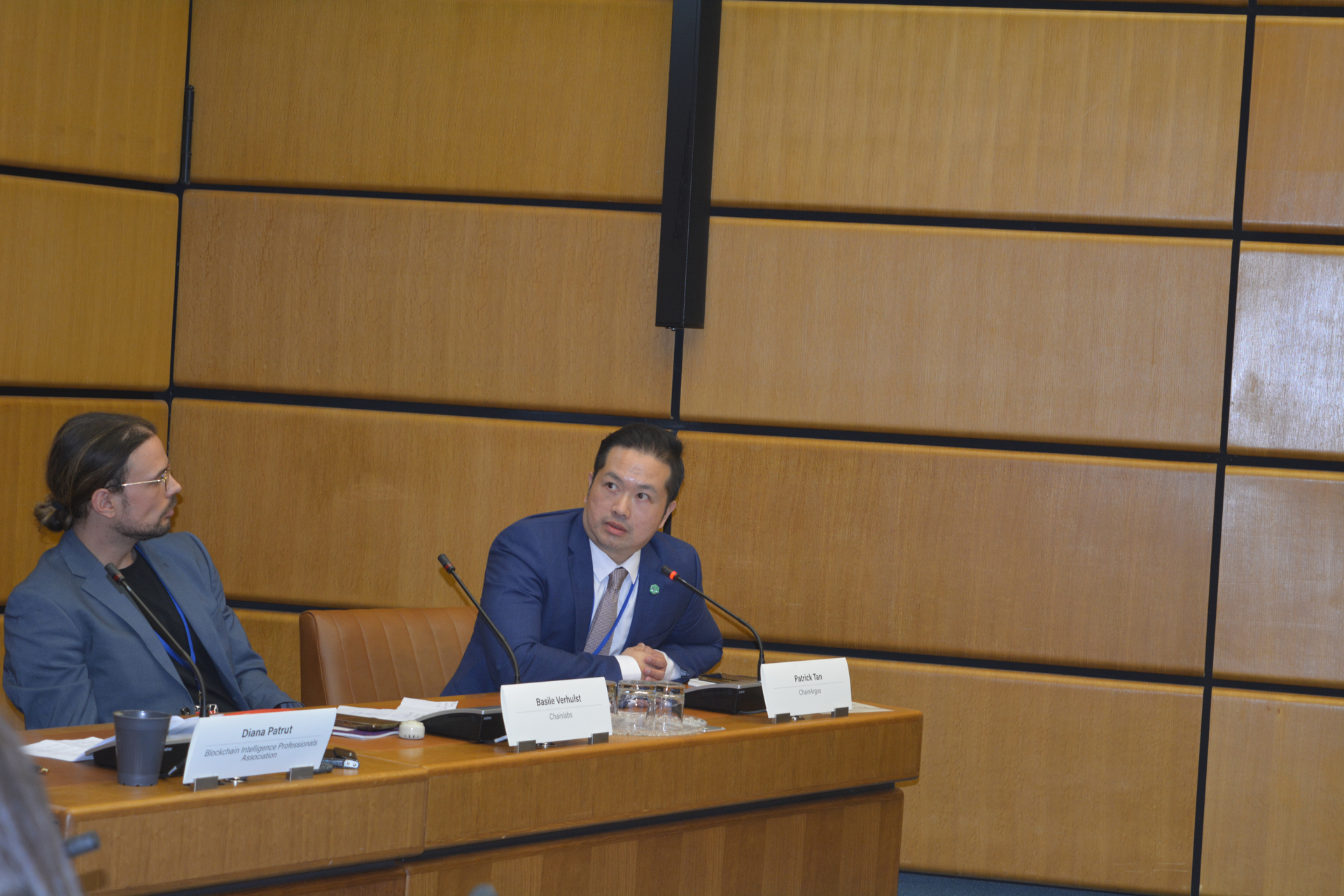
ChainArgos General Counsel Patrick Tan identified three critical areas where standardization would make a material difference in the quality of blockchain intelligence - formatting, attribution, and training.
Start Simple: The Lowest Hanging Fruit
One of the most practical takeaways from the discussion was the recognition that standardization efforts must begin with achievable goals. The lowest hanging fruit? Agreeing on standardized formatting for how we label blockchain addresses.
It’s not glamorous work, but it’s foundational. Before we can tackle complex questions about algorithmic baselines or data exchange protocols, the industry needs consensus on basic taxonomy and labeling conventions that all vendors can support.
This pragmatic approach—starting with simple, implementable standards—offers the best path toward building trust and momentum for more ambitious standardization efforts.
The Attribution Challenge
Open sharing of wallet attribution labels sounds appealing in theory. After all, pooled intelligence should lead to better outcomes for everyone.
However, the practical challenges around accuracy, liability, and methodology require serious consideration. When multiple parties rely on shared attribution data for investigative decisions, questions arise: Who bears liability if an attribution proves incorrect? How do we verify the methodology behind attribution claims? What standards of evidence should apply?
These aren’t merely technical questions—they touch on fundamental issues of professional responsibility, legal compliance, and evidentiary standards that vary across jurisdictions.
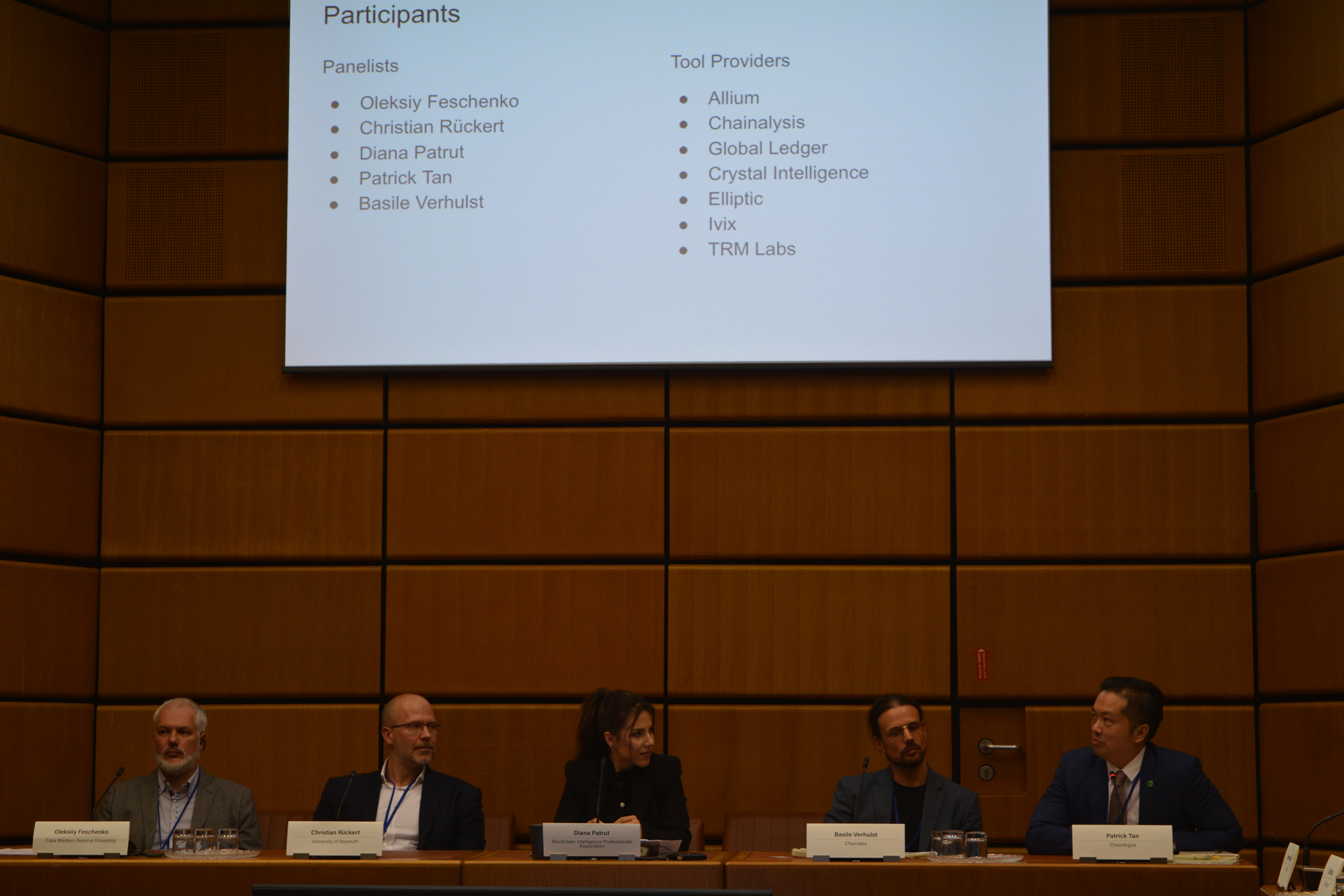
On the panel at the breakout session were (from left to right), Oleksiy Feshchenko, Christian Rückert, Diana Pătruț, Basile Verhulst, and ChainArgos General Counsel Patrick Tan.
Facts vs. Opinion: A Critical Distinction
Perhaps the most important principle that emerged from the discussion is the need to clearly distinguish between objectively provable on-chain data and analytical conclusions.
On-chain data—transaction hashes, amounts, timestamps, addresses—represent verifiable facts that anyone can independently confirm by examining the blockchain.
Analytical conclusions—such as clustering addresses into entities, attributing addresses to specific individuals or organizations, or assessing risk scores—represent interpretations that depend on algorithms, assumptions, and data sources that may differ between vendors.
This distinction is critical for building trust in blockchain intelligence and ensuring that our industry’s work stands up to scrutiny in legal proceedings. Courts need to understand what is fact and what is expert opinion, and standardization efforts must preserve this clarity.
The Role of Training and Certification
The discussion also highlighted a pressing need for standardized training and certification that isn’t led solely by private corporations.
For blockchain intelligence to mature as a profession, it requires independent standards for practitioner competency, ethical guidelines, and quality assurance mechanisms. The role of public-private partnerships and academic institutions in developing these standards cannot be underestimated.
This professionalization effort parallels the development of standards in other forensic disciplines and represents an essential step toward ensuring the reliability and admissibility of blockchain intelligence evidence.

ChainArgos General Counsel Patrick Tan stands at the plaza of the historic United Nations Office in Vienna, Austria, one of the four major office sites of the United Nations where numerous different UN agencies have a joint presence, and the venue for the 9th Global Conference on Criminal Finances and Cryptoassets
Looking Ahead
The path to standardization won’t be easy. It requires coordination among diverse stakeholders with sometimes competing interests: tool vendors, law enforcement agencies, legal professionals, academics, and regulatory bodies across different jurisdictions.
However, conversations like these—bringing together the blockchain intelligence ecosystem at venues like the United Nations—are essential first steps. The workshop concluded with concrete next steps, including plans for an initial implementation meeting in Paris to continue advancing these standardization efforts.
ChainArgos is committed to supporting this important work. Standards benefit everyone: investigators gain interoperability and reproducibility, courts gain confidence in the reliability of evidence, and the industry gains professional legitimacy.
We extend our gratitude to UNODC, Europol, and the Basel Institute on Governance for organizing this crucial dialogue and creating a space for frank, substantive discussions about improving our field.
The work of standardization is neither quick nor glamorous, but it is necessary. ChainArgos is proud to be a part of this journey with our colleagues across the industry.
For more information on the 9th Global Conference on Criminal Finances and Cryptoassets: