
COMPANY NEWS | FEBRUARY 17–18, 2026
ChainArgos Delivers Second OSCE Workshop for the National Bank of Georgia
CHAINARGOS RETURNS TO TBILISI TO TRAIN THE NATIONAL BANK OF GEORGIA DELIVERING
ADVANCED TRAINING ON VASP PRUDENTIAL REGULATION, SUPERVISORY MONITORING, AND BLOCKCHAIN INTELLIGENCE
Introduction
Tbilisi, GEORGIA – ChainArgos General Counsel Patrick Tan returned to Tbilisi in February 2026 to deliver the second in a series of specialist workshops for the National Bank of Georgia, organized under the auspices of the Organization for Security and Co-operation in Europe (OSCE).
Building directly on the foundations established in December 2025, the two-day programme brought together senior NBG officials and regional regulators for an advanced and intensive engagement focused on Georgia’s developing prudential framework for Virtual Asset Service Providers (VASPs). With the country’s September 2026 implementation deadline approaching, the workshop was designed to translate regulatory intent into supervisory practice — equipping NBG officials with the technical depth and practical tools needed to operationalize Georgia’s virtual asset oversight regime.
Patrick led three dedicated modules across the two days, covering the full spectrum from legal classification through to on-chain forensics.
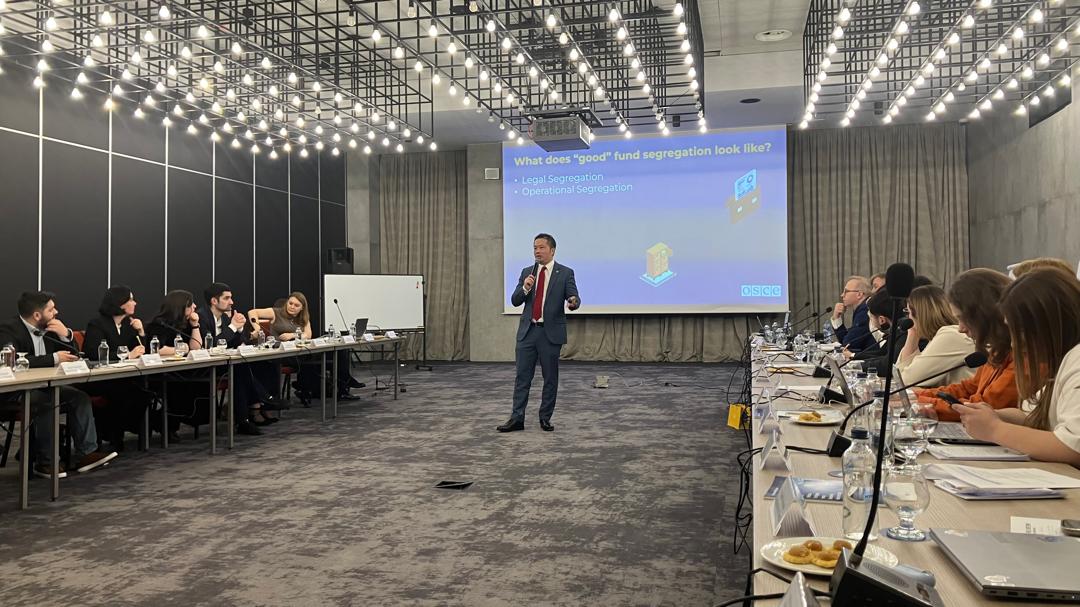
ChainArgos General Counsel Patrick Tan in Tbilisi, Georgia, sharing insight into setting up regulatory measures for prudential supervision of virtual asset service providers.
Virtual Asset Service Provider Classification and Legal Frameworks
The workshop opened with a comprehensive examination of Georgia’s legal architecture for virtual asset regulation. Patrick’s first module walked senior NBG officials through the country’s five defined virtual asset services, the distinctions between custodial and non-custodial models, and the regulatory treatment of the full range of VASP types — centralized exchanges, decentralized exchanges, OTC providers, custodians, and stablecoin issuers.
A particular focus was placed on the structural differences between bank-hosted VASPs and standalone VASP operators under Georgia’s dual-track system — and the regulatory arbitrage risks that flow from that distinction. Officials worked through real classification scenarios, building the interpretive muscle needed to apply Georgia’s framework to the full diversity of virtual asset business models they will encounter in practice.
The module also examined Georgia’s capital and licensing requirements in comparative context, benchmarking the NBG’s framework against MiCA and other leading jurisdictions — giving supervisors a clear picture of where Georgia stands, and what further development of the framework may be required.
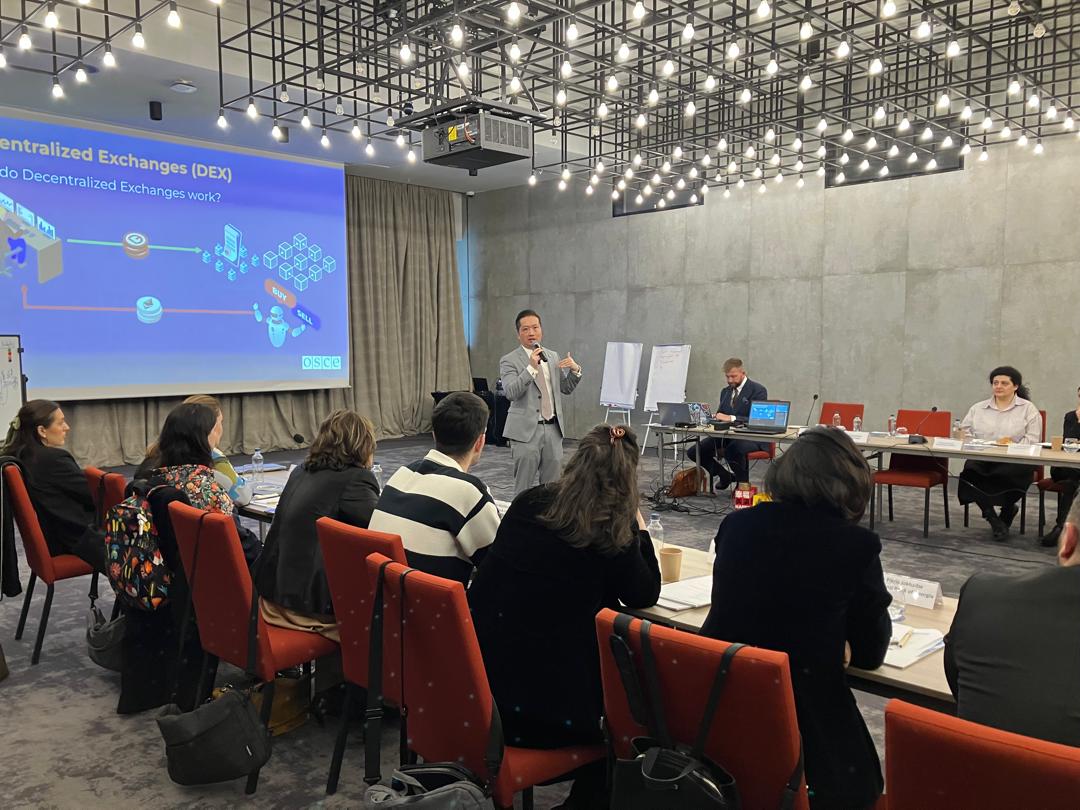
ChainArgos General Counsel Patrick Tan (with microphone) answering questions on virtual asset service provider classification for staff members of the National Bank of Georgia.
Blockchain Intelligence and Case Studies
The third module drew directly on ChainArgos’s original research and forensic methodology, bringing the technical realities of on-chain investigation into the supervisory context.
Patrick walked NBG officials through the mechanics of blockchain transaction tracing — how funds move across chains, how intermediary addresses and chain-hopping techniques are used to obscure the trail, and how the right analytical approach can reconstruct those flows. The module addressed the tools available to supervisors, the evidentiary standards required to act on blockchain intelligence, and — critically — the limitations of commonly relied-upon tracing heuristics such as co-spend clustering and peel chain analysis.
ChainArgos’s empirical research demonstrating false positive rates of between 7% and 83% for widely used clustering methodologies was presented as a case study in why technical literacy matters for regulators: supervisory decisions and enforcement actions built on flawed analytical foundations create legal risk and undermine institutional credibility. For regulators seeking to build durable, defensible oversight frameworks, understanding what the tools can and cannot do is not optional.
The module closed with a series of case studies drawn from ChainArgos’s published work on illicit finance flows, sanctions evasion, and stablecoin undercollateralization — giving NBG officials a direct window into the kinds of fact patterns they can expect to encounter as Georgia’s virtual asset sector develops.
Georgia: Building Supervisory Expertise for the Long Term
What continues to distinguish the NBG’s approach is the seriousness with which senior officials engage with the technical substance of virtual asset regulation. Across both the December 2025 and February 2026 workshops, participants arrived prepared — with specific questions, an understanding of the gaps in the existing framework, and a determination to close them.
Georgia is not simply transposing international standards. It is building genuine supervisory competence, calibrated to the realities of how virtual asset markets actually operate. The pivot toward activity-based regulation, the investment in on-chain monitoring capability, and the willingness to stress-test analytical methodology all point to a jurisdiction that is taking virtual asset oversight seriously as a long-term institutional commitment — not a compliance checkbox.
For VASPs and digital asset businesses evaluating jurisdictions in the region, that combination of regulatory clarity and supervisory competence is increasingly a significant differentiating factor.
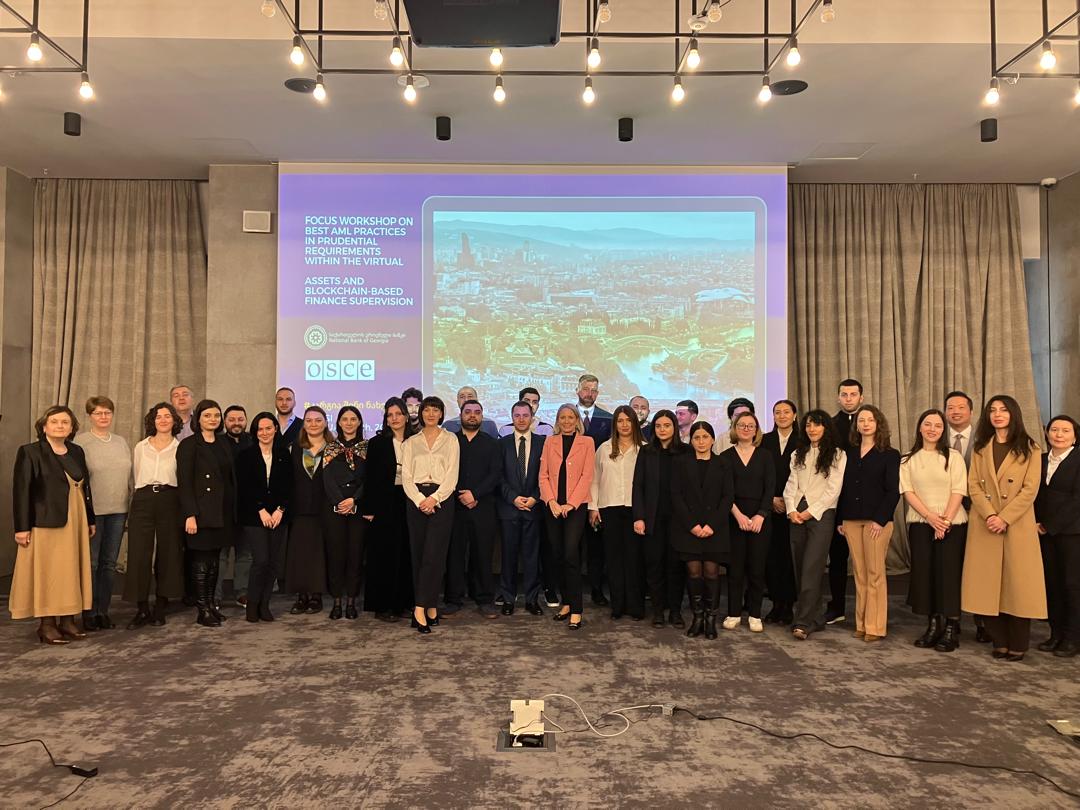
ChainArgos General Counsel Patrick Tan with OSCE staffers and staff members of the National Bank of Georgia.
Looking Ahead
The December 2025 and February 2026 workshops represent an important model for what regulatory capacity building in the virtual asset space can look like: technically rigorous, practically focused, and built around genuine knowledge transfer rather than high-level policy exposition.
ChainArgos is honored to have served the National Bank of Georgia in this capacity across both engagements, and looks forward to continuing to support the NBG as it moves toward September 2026 implementation. Our thanks to the OSCE for facilitating this important work, and to our fellow experts for the collaborative spirit that defined both programmes.
Effective, technically literate regulators make the entire digital asset ecosystem stronger. Georgia is building exactly that.